
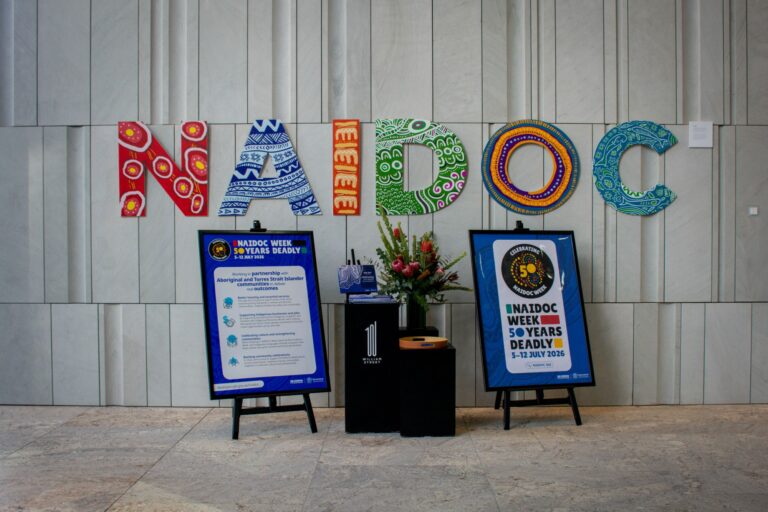
The Office of the Commissioner (Meriba Omasker Kaziw Kazipa) (OCMOKK) proudly joined Aboriginal and Torres Strait Islander families living in Brisbane to celebrate NAIDOC Week 2026 at a line-up of community events.
Kicking off at the Logan Community NAIDOC Celebrations, the OCMOKK team connected with Torres Strait Island families, community organisations, and the broader public to raise awareness of our Ailan Kastom child rearing practices and the importance of the Meriba Omasker Kaziw Kazipa (Torres Strait Islander Child Rearing Practice) Act 2020. Through community conversations and the distribution of OCMOKK resources and merchandise, the team highlighted how the legislation recognises and protects one of the world’s longest continuing cultural child rearing practices.
A highlight of the week saw Commissioner C’Zarke Maza and Kupai Omasker Advisory Group Member Dr. McRose Elu presenting at the Queensland Government Department NAIDOC Showcase. Together they shared the story of OCMOKK and the significance of the Act with government representatives and attendees from across Queensland.
Their presentation demonstrated how legal recognition of Ailan Kastom child rearing practices strengthens cultural identity, supports self-determination and ensures this enduring cultural knowledge and practice continues to be respected and recognised for future generations to come.
In his presentation, Commissioner C’Zarke Maza acknowledged the significance of this year’s milestone celebration and the enduring legacy of the NAIDOC movement.
“This year’s NAIDOC Week theme, 50 Years of Deadly, celebrates five decades of recognising the strength, resilience, achievements and leadership of Aboriginal and Torres Strait Islander peoples,” Mr Maza said.
“It honours the Elders, communities, artists and advocates who have shaped the movement while inspiring future generations to continue carrying culture forward,”
“For Torres Strait Islanders, Ailan Kastom child rearing practice has existed for generations,”
“For Torres Strait Islander peoples, Alian Kastom child rearing practice has existed for countless generations. The Meriba Omasker Kaziw Kazipa (Torres Strait Islander Child Rearing Practice Act) 2020 does not create this practice, it recognises and protects an enduring cultural tradition and law that has always been part of who we are.,” he added.
To see out the week, the OCMOKK team participated in the nation’s largest NAIDOC Celebrations; The annual Musgrave Park NAIDOC Family Fun Day.
Throughout the day, the OCMOKK information stall welcomed hundreds of families and community members, providing information about Cultural Recognition Orders and engaging in meaningful conversations about preserving culture, strengthening family identity and ensuring Torres Strait Islander children continue to have their birthright Ailan Kastom child rearing arrangements recognised under Queensland law.
Commissioner Maza said the similarities between this year’s NAIDOC theme and OCMOKK’s work were significant.
“The NAIDOC movement has endured because First Nations people have never stopped standing proudly in culture,” Mr Maza said.
“In much the same way, our Ailan Kastom child rearing practices have endured because generations of Torres Strait Islander families have continued to uphold our cultural responsibilities,”
“Our legislation recognises what has always existed. It provides legal recognition for a cultural practice that has cared for children for generations while ensuring future generations can continue to grow up knowing who they are, where they belong and the families who love and raise them,”
“As we celebrate 50 Years of Deadly, we honour those who came before us while reaffirming our commitment to preserving and protecting our culture and continuing the work that will benefit the generations still to come,”


